Before becoming an international tourist destination, Ibiza was an island deeply linked to the land. Its fields of almond, carob, fig and olive trees, its orchards and its farmhouses were part of an economy in which agriculture and livestock farming were essential.
Although the landscape has changed, agricultural Ibiza is still very much present. Today we invite you to discover its origins, some of the places where we can still recognize this legacy and the traditions that are still alive.
A history of agriculture, mills and water use
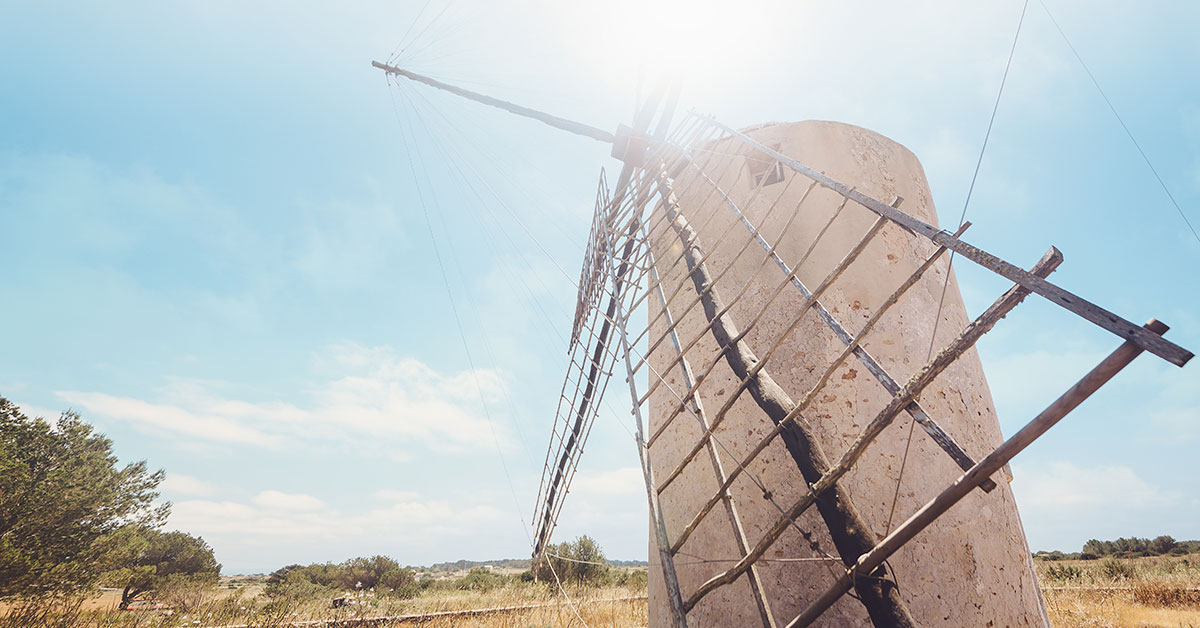
Ibizan agriculture has very ancient roots. The Phoenicians and Punics already developed agricultural holdings dedicated to the cultivation of cereals, vines and olive trees. Centuries later, during the Andalusian era, irrigation systems were perfected that made it possible to take advantage of a particularly valuable resource: water.
Irrigation ditches, pools, waterwheels, wells and cisterns made it possible to cultivate even in difficult terrain. The terraces supported by dry stone walls made it possible to take advantage of the slopes, while the windmills and water mills facilitated tasks such as grinding grain.
For centuries, many peasant families maintained an economy of self-consumption, growing their own food and raising animals. This way of life left a mark that we can still recognize in many corners of Ibiza.
Five places to discover Ibiza's agricultural past
Ses Feixes, Eivissa
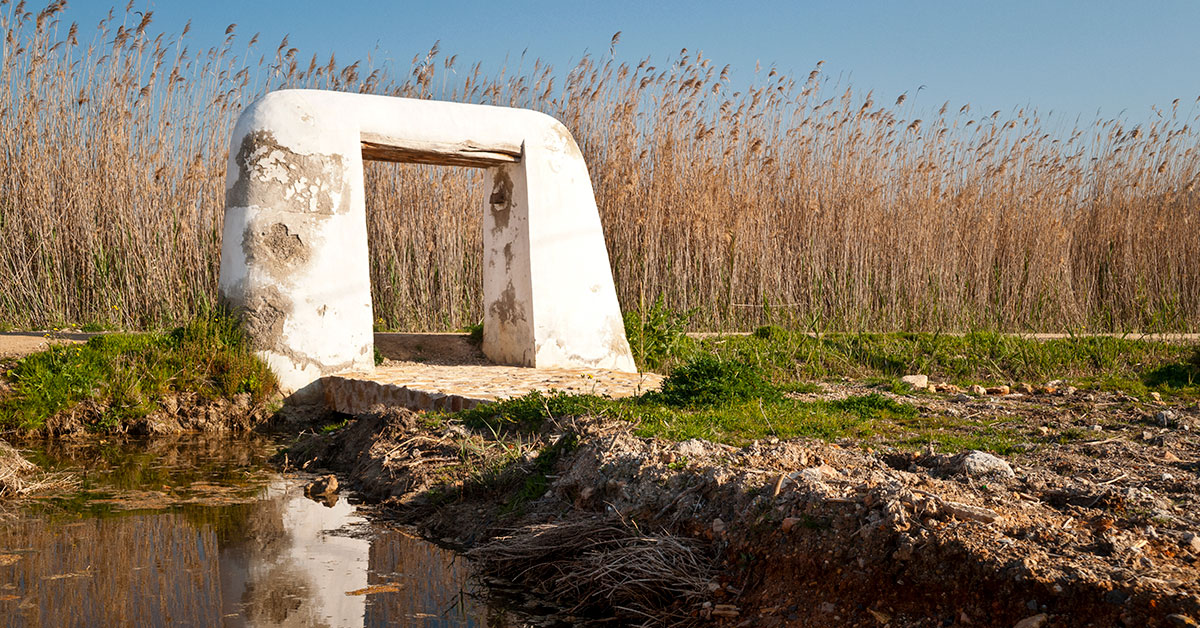
Very close to Talamanca we find Ses Feixes, an old area of orchards that supplied fruit and vegetables to the city.
Its unique system of canals and ditches, heir to Muslim Ibiza, distributed water among the cultivation plots. Although today the landscape is very different, some of its characteristic portals de feixa, which gave access to the properties, are still preserved.
Es Broll de Buscastell, Sant Antoni de Portmany
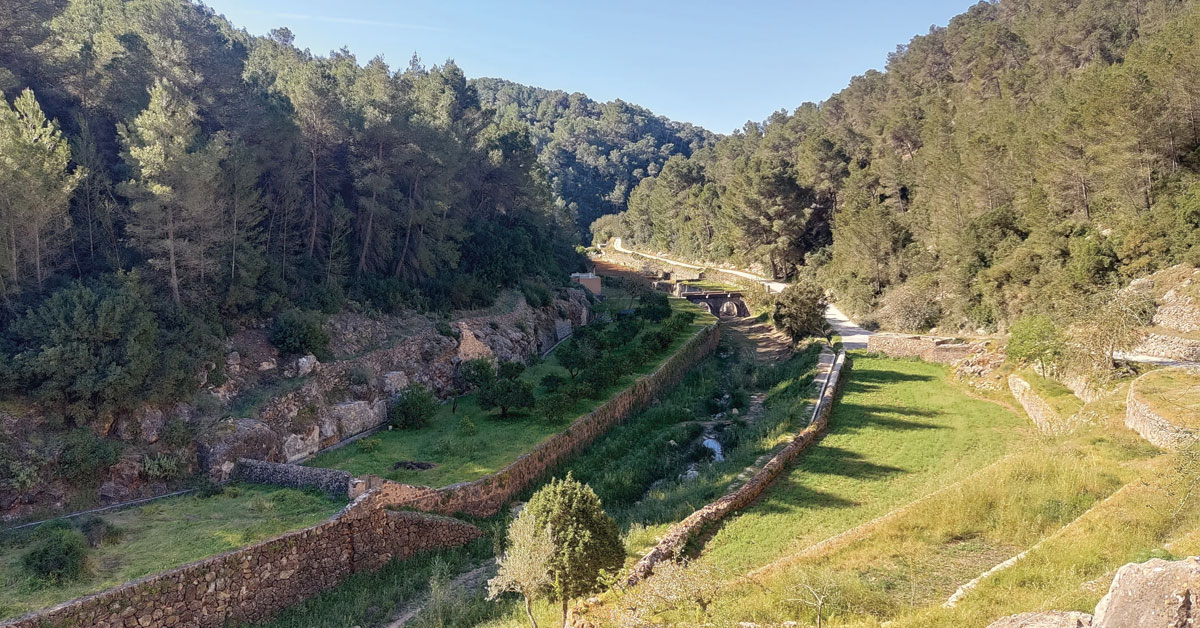
In the Buscastell valley we find one of the most interesting examples of traditional water use.
Es Broll preserves a hydraulic system of Andalusian origin made up of ditches, pools and canals that distribute the water among the crop terraces. A particularly beautiful landscape after the rains and that demonstrates the ingenuity of generations of farmers.
Ca n'Andreu des Trull, Santa Eulària des Riu
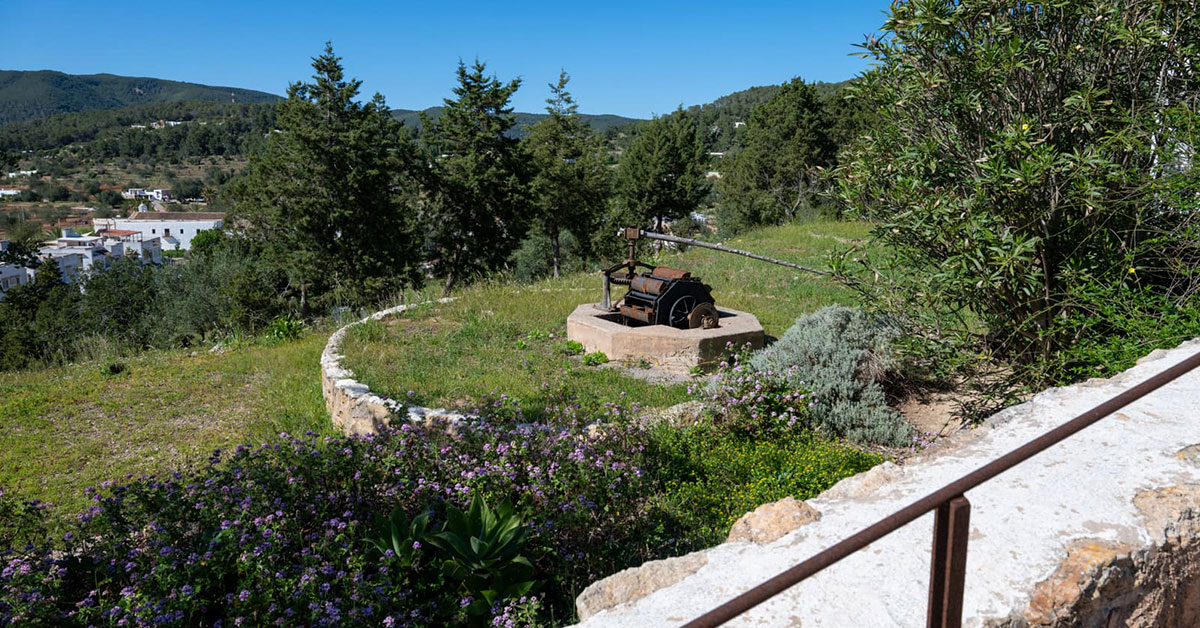
In Sant Carles de Peralta you will find Ca n'Andreu des Trull, a farmhouse documented since 1730 that allows you to discover what life was like on a traditional farm.
It currently functions as a museum space and preserves numerous rooms, tools and elements related to field work, including its old trull, used for the production of oil.
Font de Balàfia, Sant Joan de Labritja
In the surroundings of Sant Llorenç de Balàfia we find the Font de Balàfia, historically linked to the water supply of the inhabitants and the nearby crops.
The fountain, its pools and its old canals help us to understand how irrigation was organised in the rural environment. A visit that can be combined with the historic site of Balàfia and its characteristic farmhouses.
Ses Païsses de Cala d'Hort, Sant Josep de sa Talaia
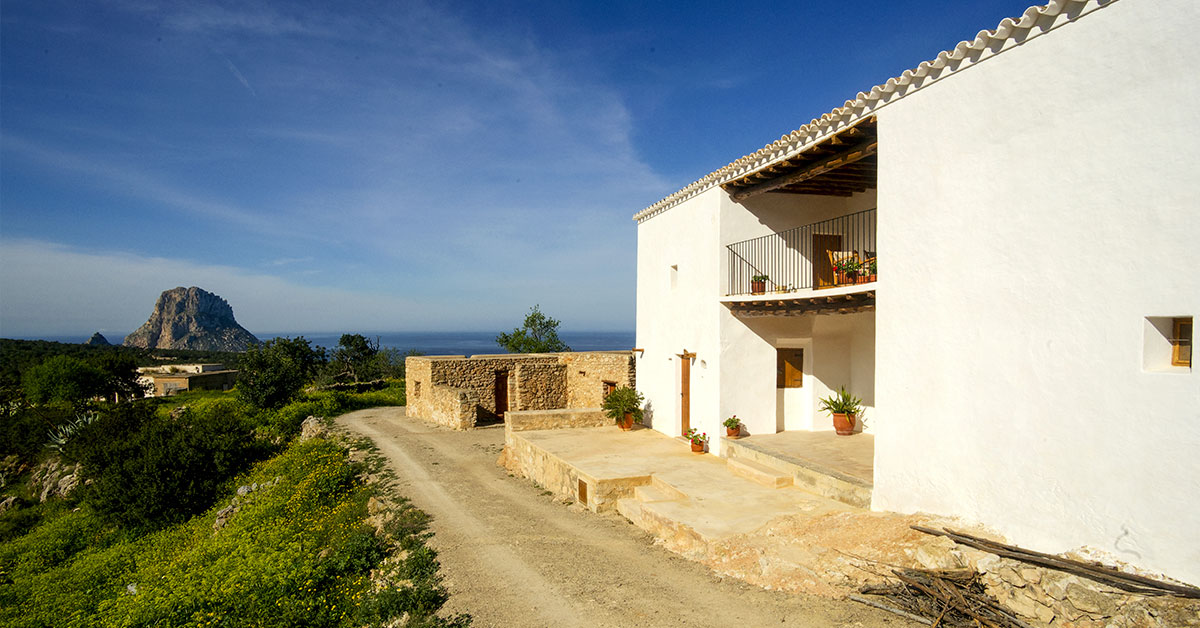
Did you know that oil and wine were already produced in Ibiza more than two thousand years ago?
The site of Ses Païsses de Cala d'Hort preserves remains of a rural farm from the Punic and Roman periods, with spaces dedicated to agricultural activities, including an old oil mill and a winery.
Next to the archaeological site we also find a traditional farmhouse that allows us to get closer to the evolution of Ibizan rural life.
The peasant tradition that is still alive
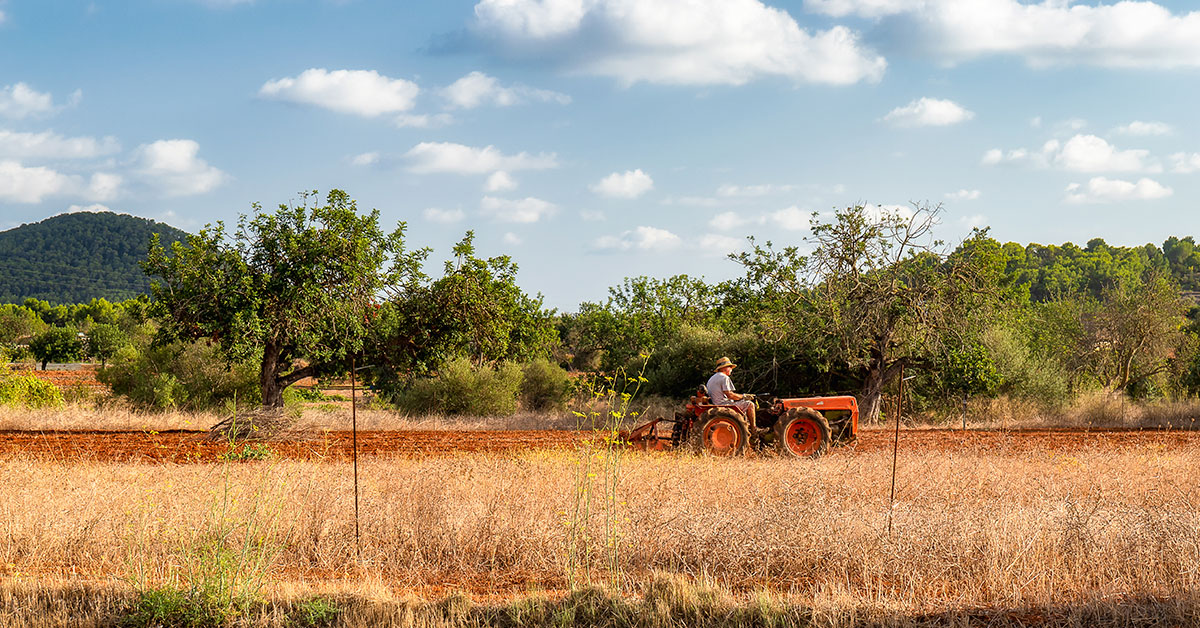
Although many old farms disappeared or changed activity, agriculture continues to be part of Ibiza's identity.
We still find families dedicated to the cultivation of vegetables, potatoes, fruits, cereals, vineyards and olive trees with irrigation systems and tools inspired by our origins.
The production of oil, artisanal products and traditional recipes that take advantage of the ingredients of each season also endure.
Farmers' markets, cooperatives and local producers play a key role in conserving this living heritage. Buying local produce is also a way to support the agricultural landscape and those who continue to work the land.
Because the peasant Ibiza does not belong only to museums: it is also in the fields that are still cultivated, in the products that reach our tables and in the knowledge that continues to be transmitted from generation to generation.
Descubreibiza.com makes it easy for you
To get to know agricultural Ibiza is to discover another part of the history and identity of our island.
In Descubreibiza.com you will find villages, routes, natural spaces, heritage, gastronomy and many other proposals to continue exploring its corners.
In addition, you can count on Lali, our AI-based chatbot available in multiple languages, and Cicerone, our intelligent planner to create routes adapted to your tastes and interests.
Experience, enjoy and discover Ibiza at your own pace!