How to Protect Your Eyes from Silent and Irreversible Retinal Damage During the Solar Eclipse

- The Ophthalmology Unit at Grupo Policlínica provides specific recommendations and warns that viewing the solar eclipse without certified protective glasses can cause irreversible retinal damage in just a few seconds.
- The injury causes no pain, and the first symptoms may appear hours later, when the damage is already irreversible, including blurred vision, spots or distorted images.
The eclipse on 12 August will be the first total solar eclipse visible from the Iberian Peninsula and the islands in more than a century. Despite the historic nature of this event, specialists from the Ophthalmology Unit at Grupo Policlínica are urging the public to take precautions to prevent irreversible retinal damage.
The phenomenon, which will have a total duration of 1 minute and 48 seconds, is part of the so-called “trio of eclipses”, beginning on 12 August and continuing with another total eclipse on 2 August 2027, before concluding on 26 January 2028 with an annular eclipse.
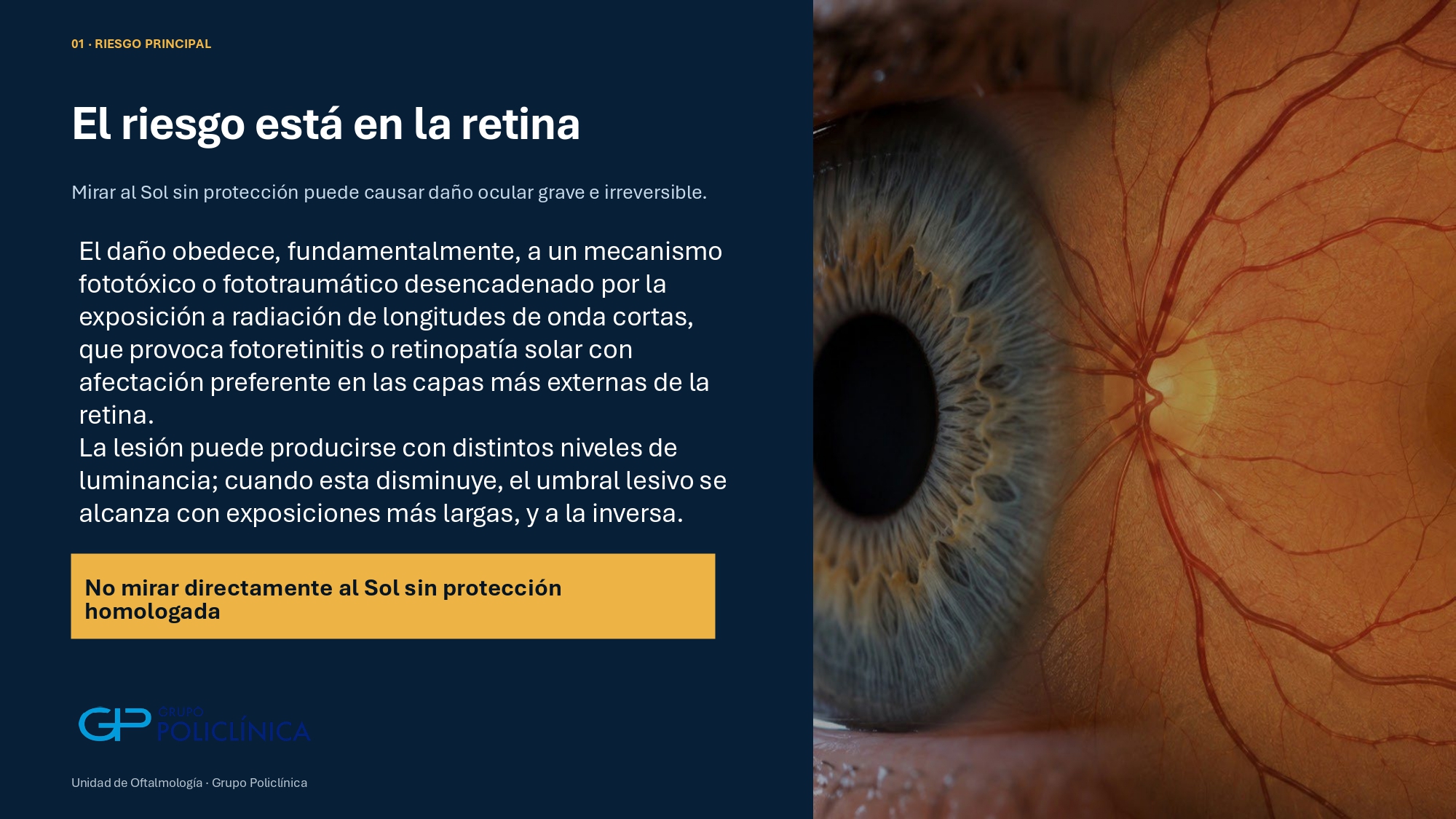
“We are about to witness an extraordinary phenomenon, but the occasion also requires an equally high level of precaution,” says Dr Martina Septiembre, ophthalmologist at Clínica Vila Parc. “Exposure to solar radiation without adequate protection, even when the sun is partially obscured, triggers a phototoxic mechanism that causes solar retinopathy,” she explains.
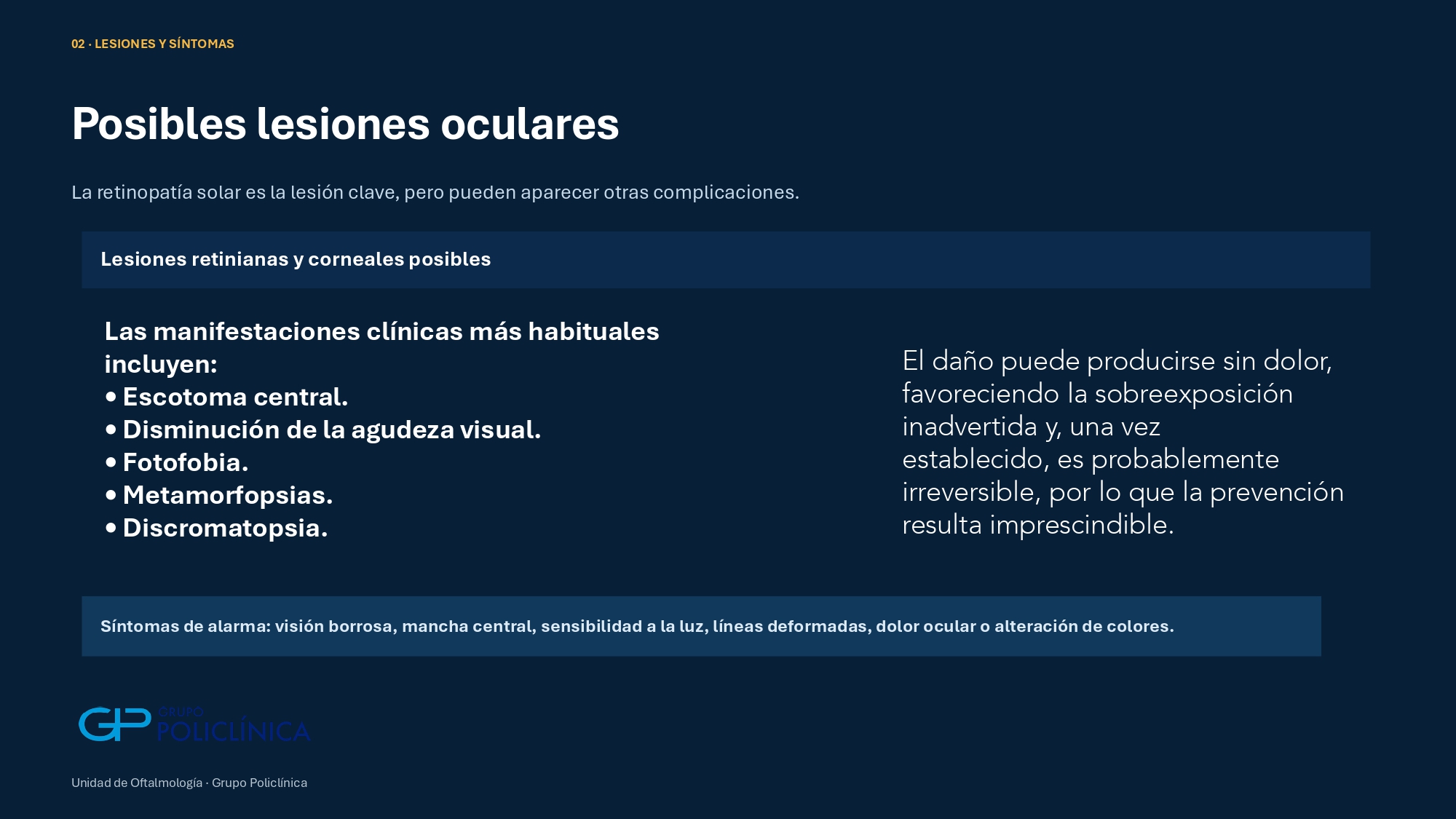
“The retina can be damaged without causing any pain, and symptoms may appear later, once the injury has already occurred,” adds Dr Septiembre. The most common clinical manifestations include scotomas (dark spots in the central field of vision), reduced visual acuity, photophobia, metamorphopsia (distortion of lines) and dyschromatopsia (altered colour perception).
Recommendations before, during and after the event
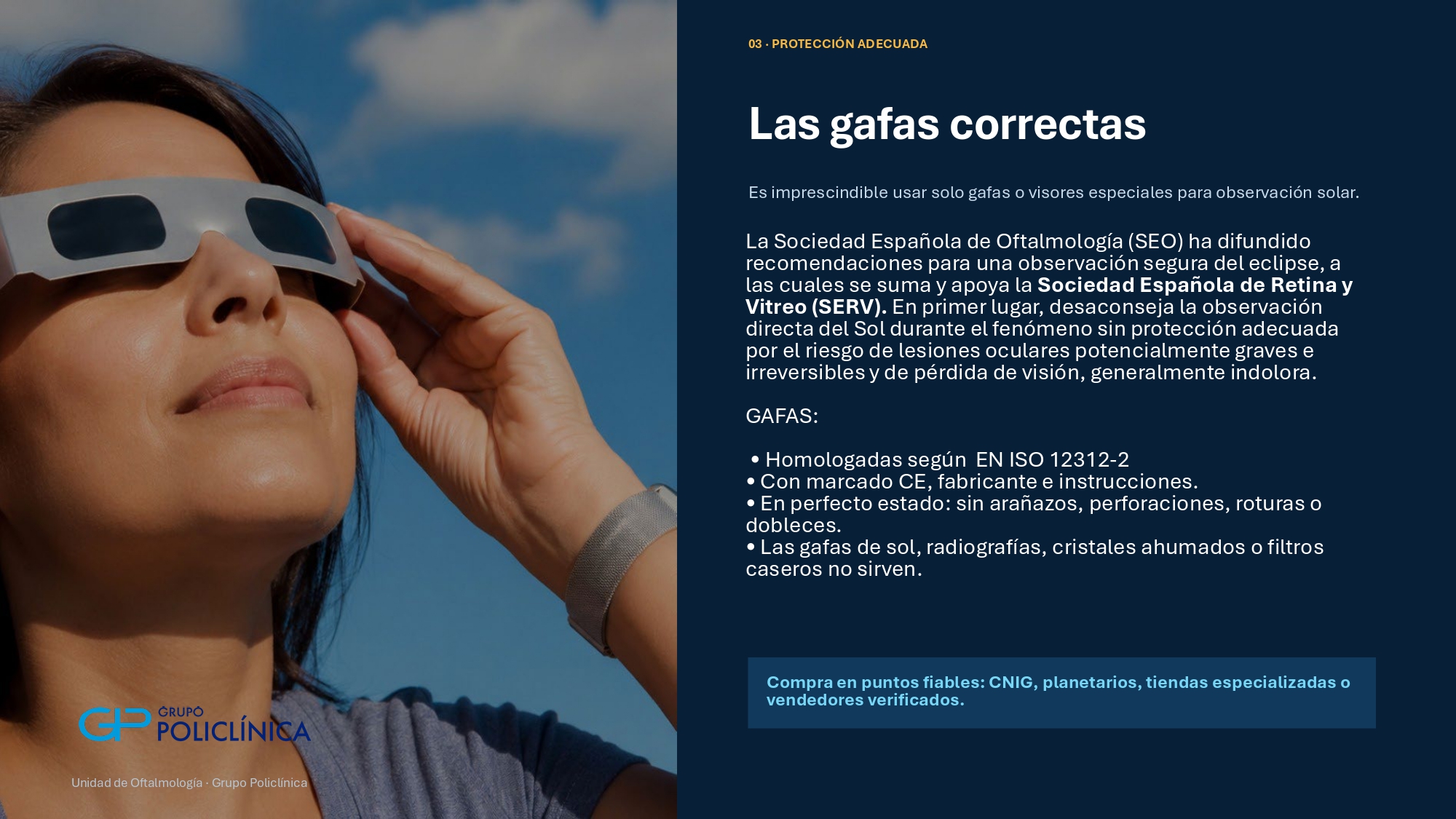
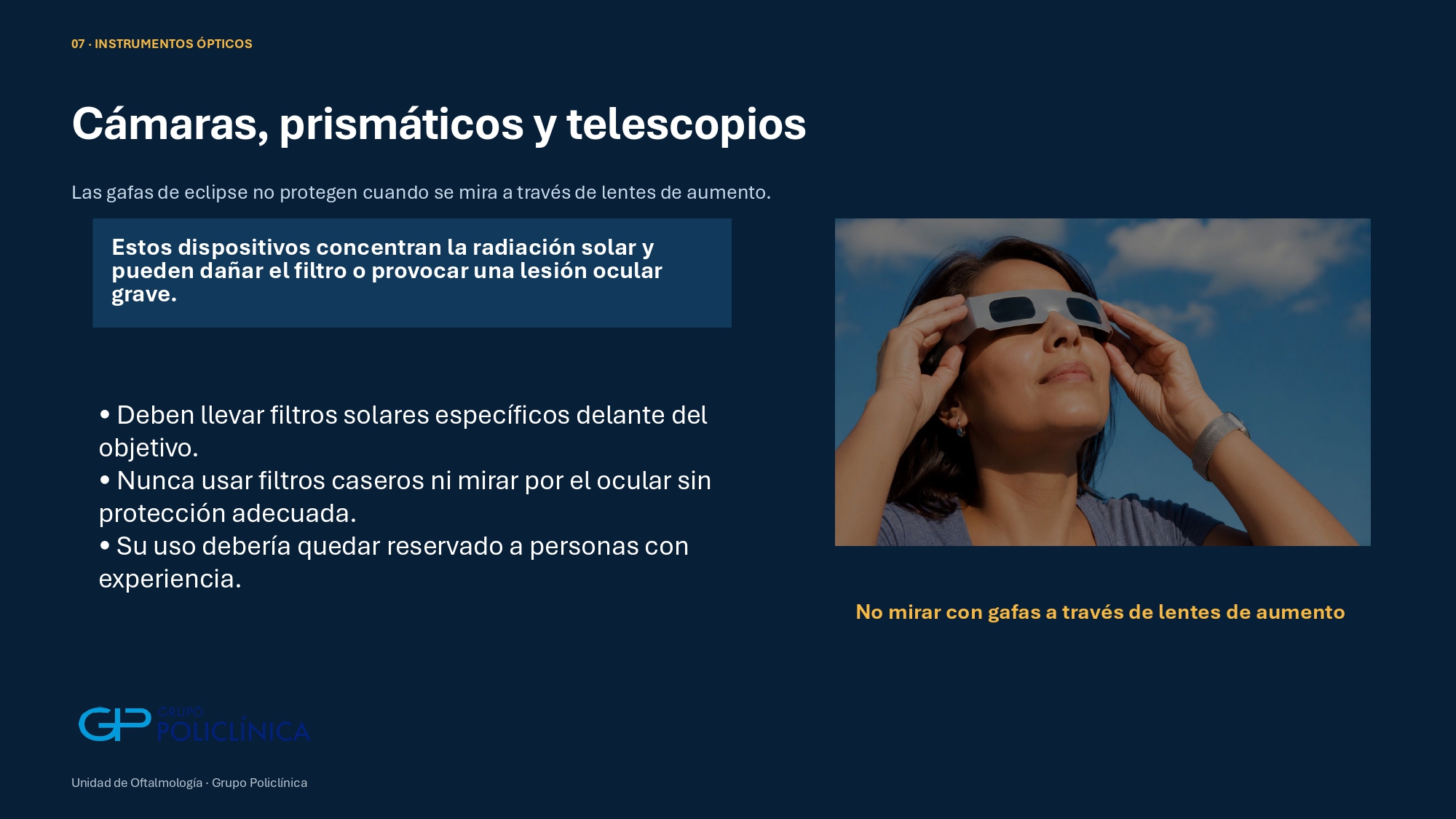
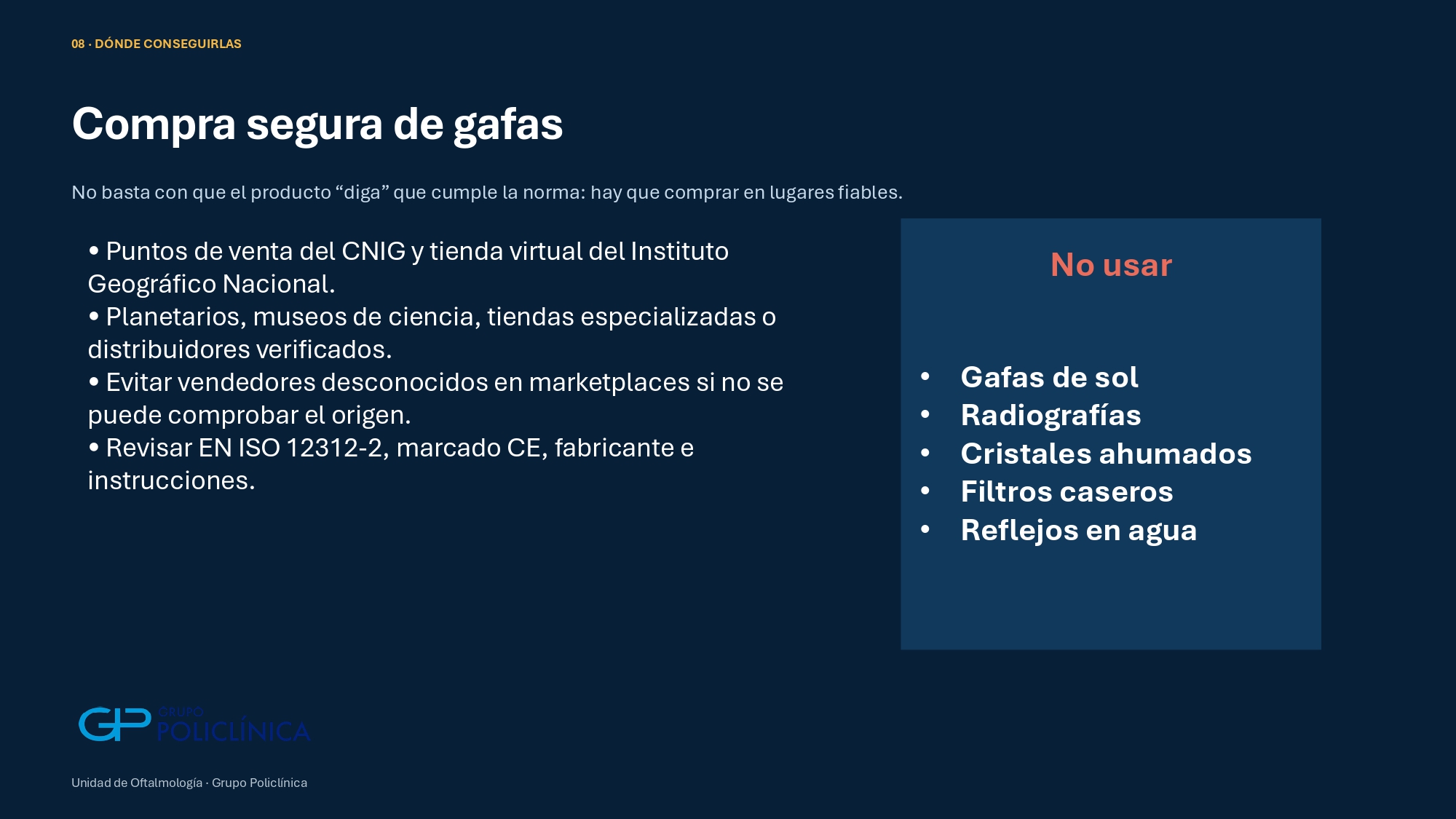
The Spanish Retina and Vitreous Society (SERV) stresses that the only safe way to observe an eclipse is by using certified eclipse glasses or viewers that comply with the EN ISO 12312-2 standard and bear the CE marking. Conventional sunglasses, homemade filters and improvised methods do not protect against potential retinal damage.
“We should never look directly at the sun, even during the partial phases of the eclipse,” says the ophthalmology specialist. “When using cameras, binoculars or telescopes, they must be fitted with specific solar filters,” she emphasises.
The eclipse, which will be visible from more than 230 observation points across Spain, will vary in duration depending on the location. However, viewing conditions will be particularly significant in northern mainland Spain and the Balearic Islands.
Given its historic significance, specialists from Grupo Policlínica de Ibiza have compiled a list of recommendations to follow before, during and after the event:
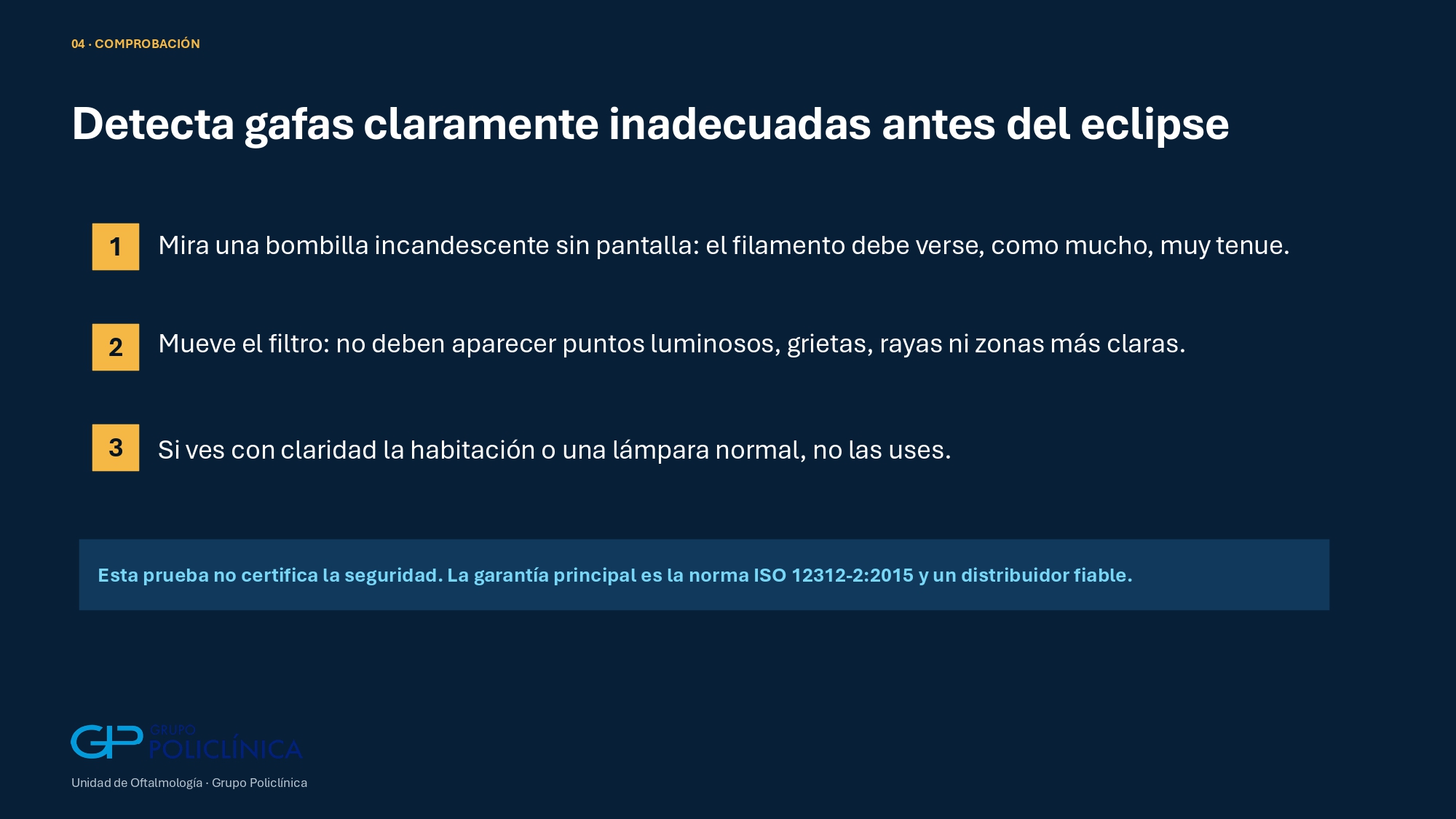
- Check well in advance that certified glasses and viewers comply with the relevant safety standards.
- Avoid using conventional sunglasses or homemade filters.
- Identify a safe viewing location and prepare for the event by consulting official sources.
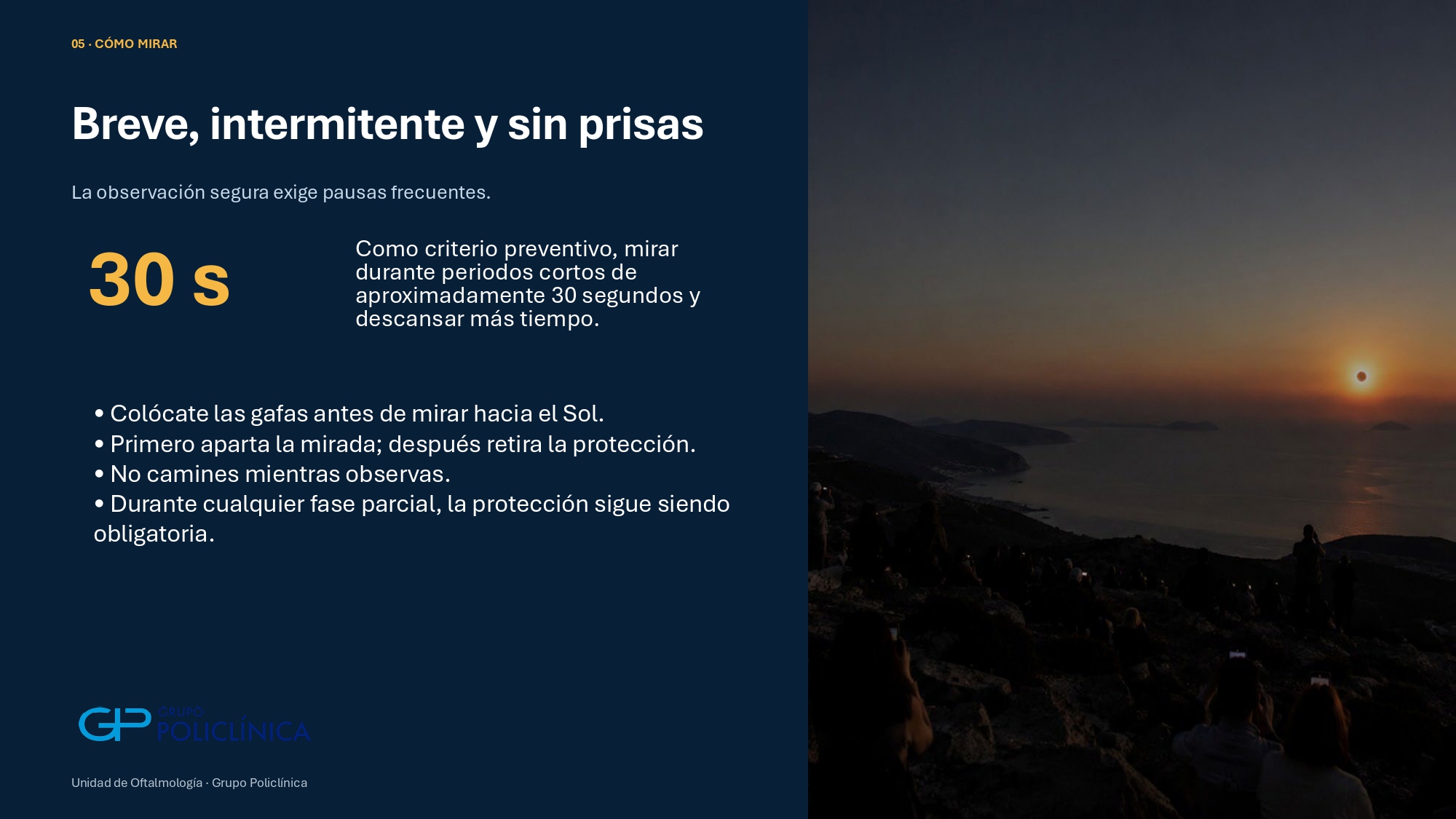
- Observe the phenomenon only briefly and intermittently, and look away immediately at the slightest sign of discomfort or glare.
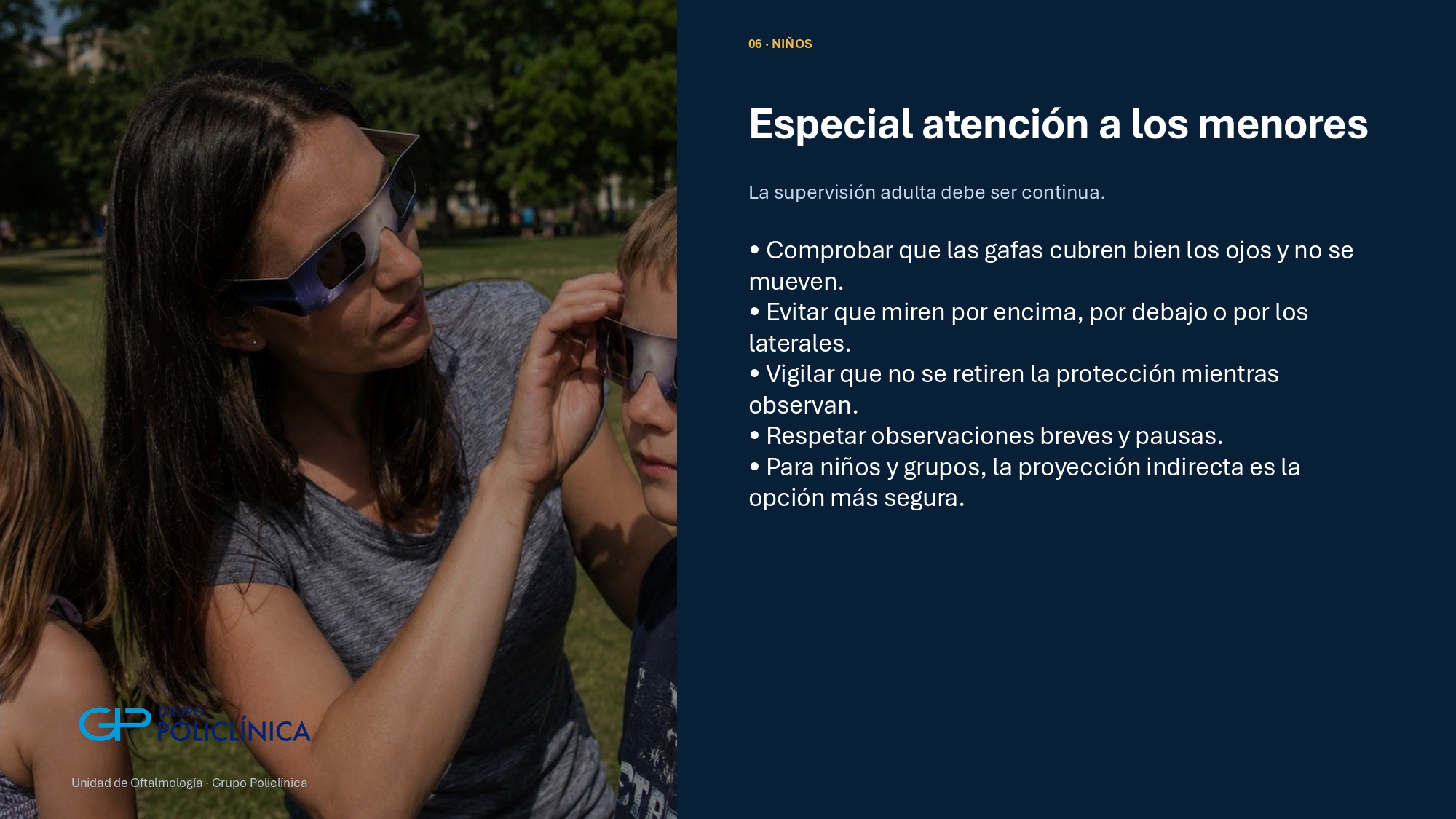
- Establish an active supervision protocol for children before and during the event.
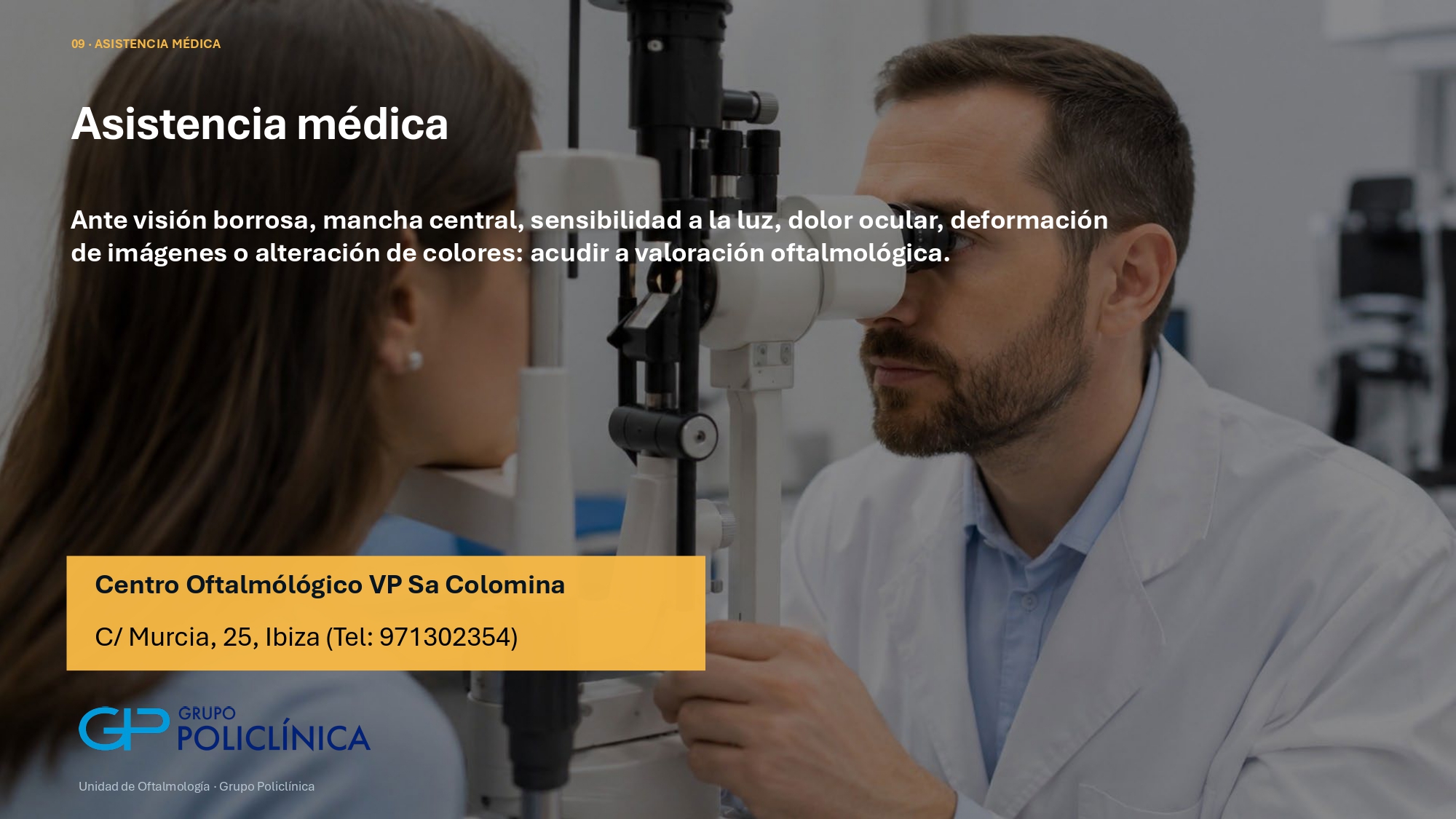
- If symptoms such as blurred vision, spots in the field of vision, distortion or photophobia occur, seek emergency medical attention at your hospital.
Specialists emphasise that the onset of symptoms such as blurred vision, spots, eye pain or distorted vision requires immediate ophthalmological assessment.